


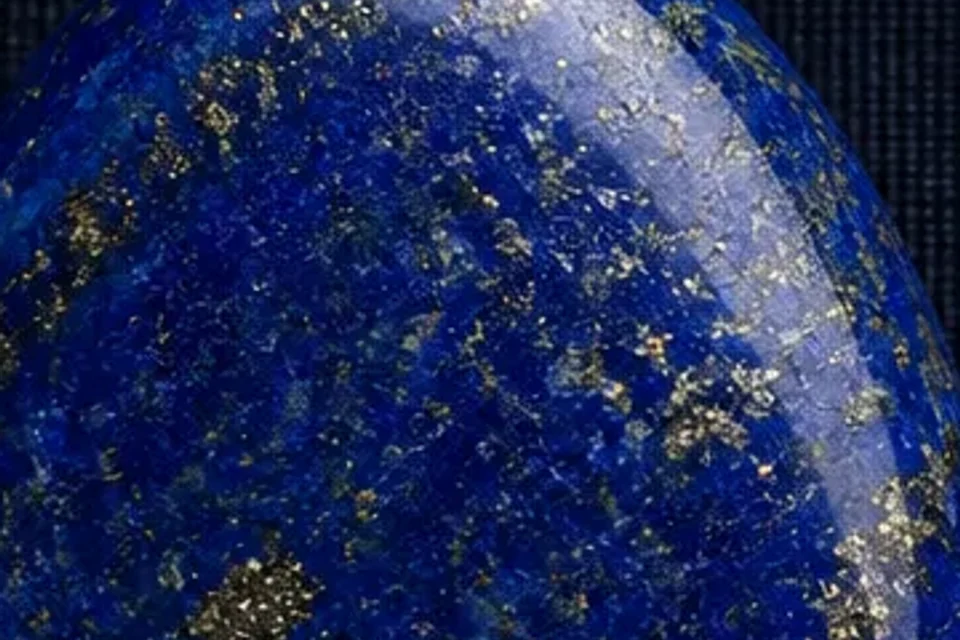
Lapis lazuli
Decree No. 62, Ministry of Mining
Year: 1984
Declares lapis lazuli the national stone of Chile. Signed on 20 September 1984 and published in the Diario Oficial on 23 November of the same year.

Type at least 2 letters.
Chilean stones
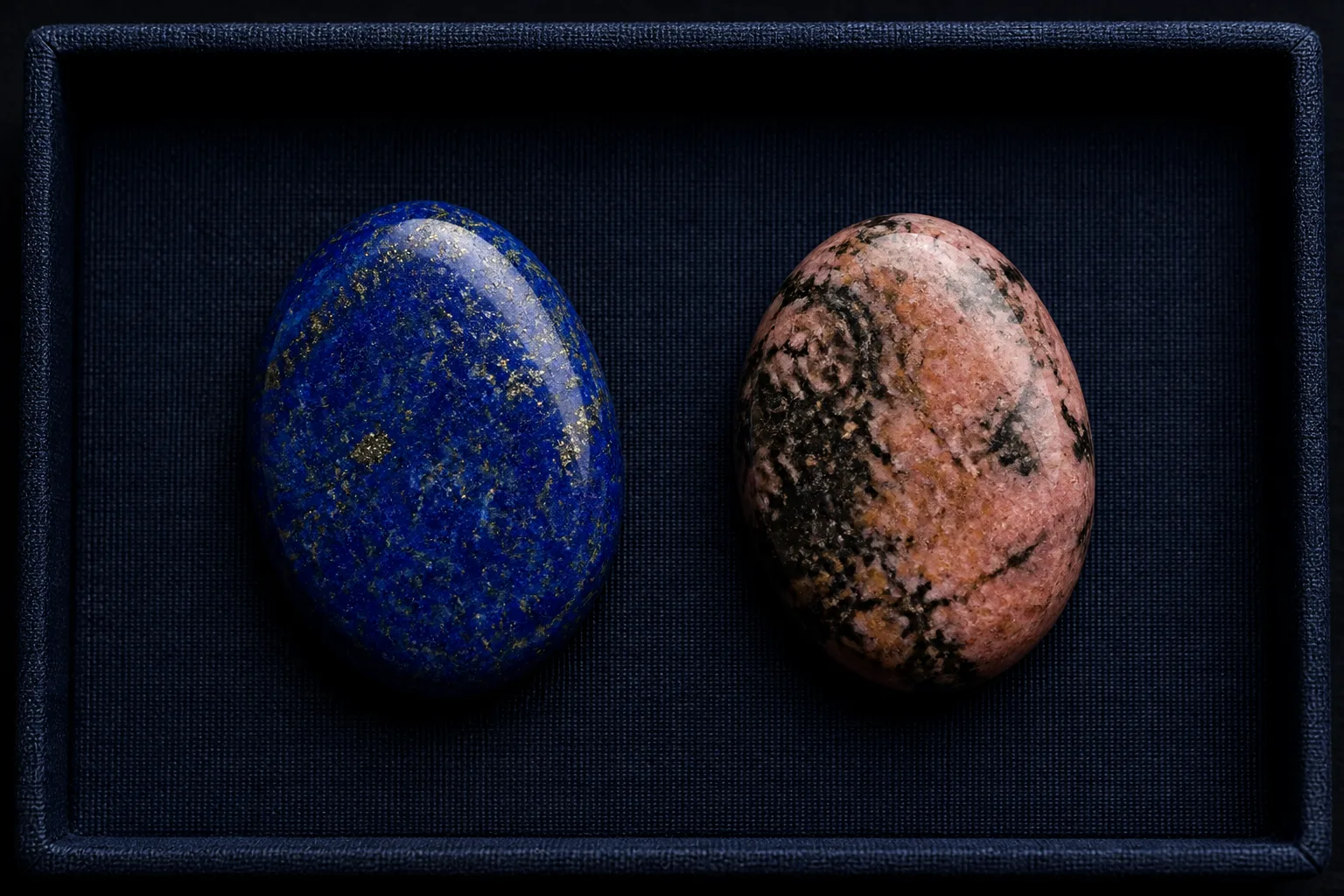
Chile recognises two stones by decree: lapis lazuli and combarbalite. This line is reserved for pieces whose Chilean origin we can document, and none in the catalogue carries that label yet. When one does, its product page will say where the stone comes from.
Official provenance
These are the two stones Chile recognises in decrees published in its Official Gazette, and the basis of this line: a piece only joins it if we can document that its stone comes from here.
Decree No. 62, Ministry of Mining
Year: 1984
Declares lapis lazuli the national stone of Chile. Signed on 20 September 1984 and published in the Diario Oficial on 23 November of the same year.
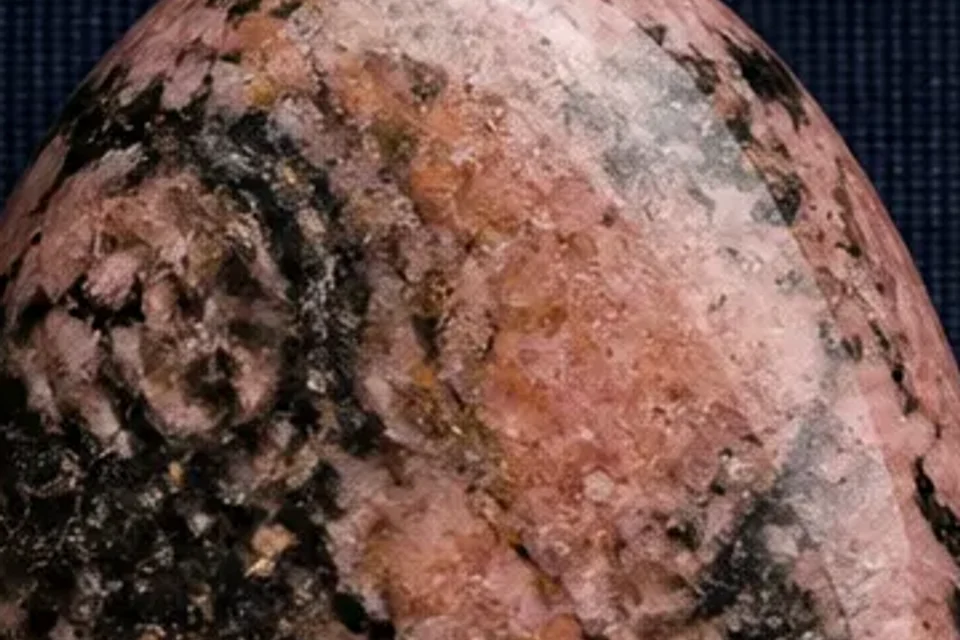
Supreme Decree No. 49
Year: 1993
Recognises combarbalite as an ornamental stone of national interest because of its origin and characteristics.
Material note
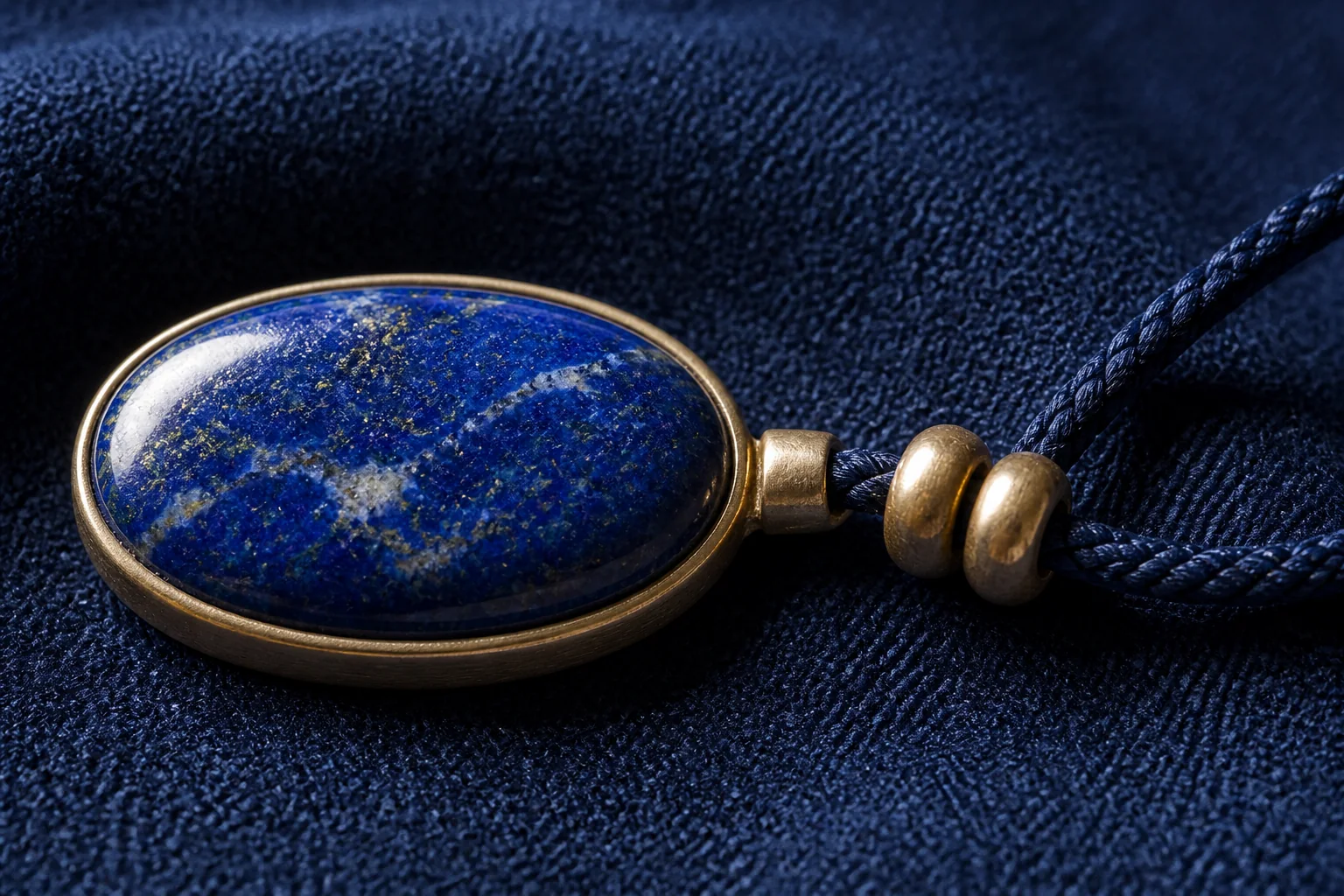
We work with the real variation in every stone. A vein, inclusion or tonal shift is not a flaw to hide: it is information for deciding how and what to pair it with.
Beyond Chilean origin
We choose every stone for colour, texture and presence, and every product page states its material. Chilean origin is a separate line, still in preparation.
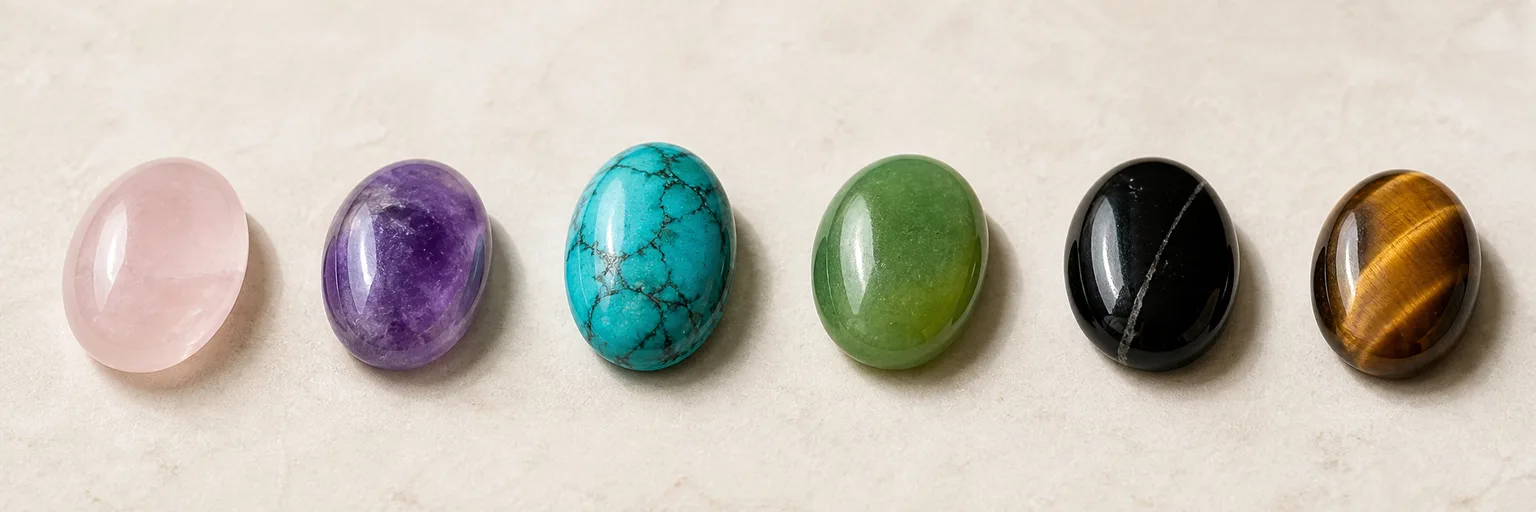
Stone by stone
These stones appear repeatedly in our pieces and guides today. Every one changes with its cut, the light and its own formation, so we begin with a concise description before going deeper.
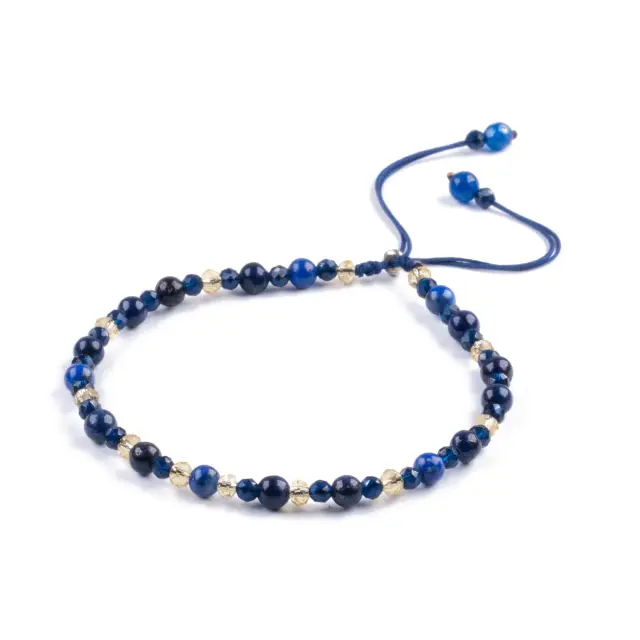 Lapis lazuliDeep blue, sometimes crossed by pale calcite and small glints of pyrite.Learn more
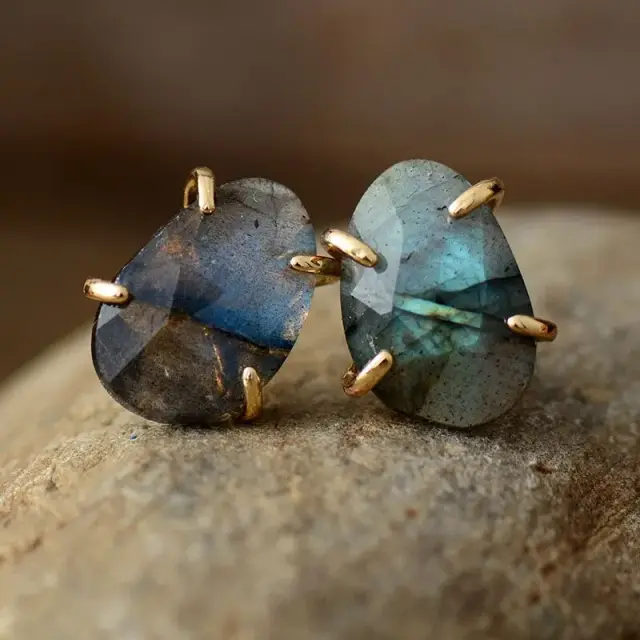 LabradoriteA grey feldspar whose sheen can reveal blue, green and gold as the piece moves.Learn more
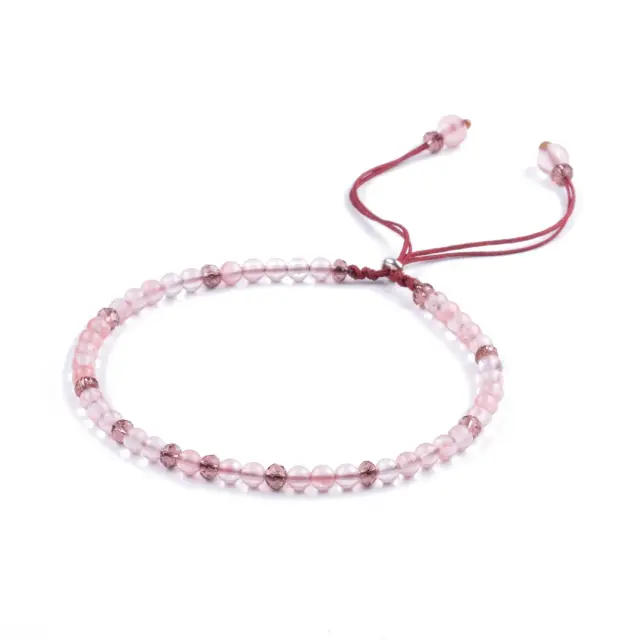 Rose quartzSoft pink quartz, translucent or opaque depending on its natural inclusions.Learn more
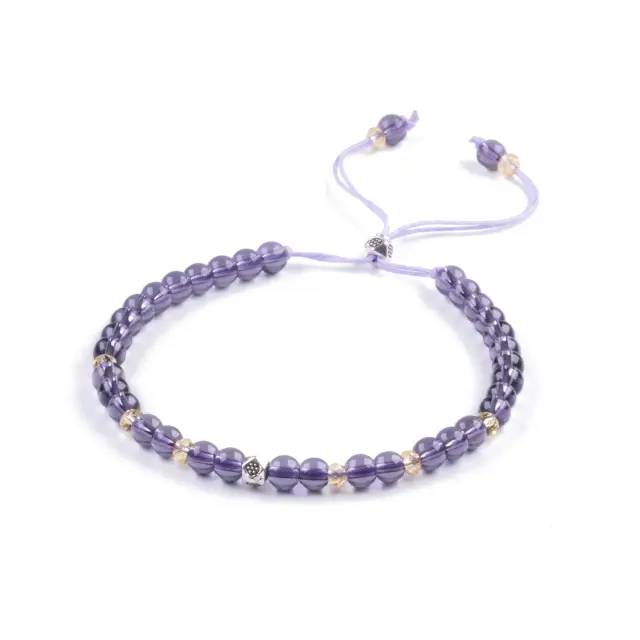 AmethystThe violet variety of quartz, ranging from pale lavender to a deeper purple.Learn more
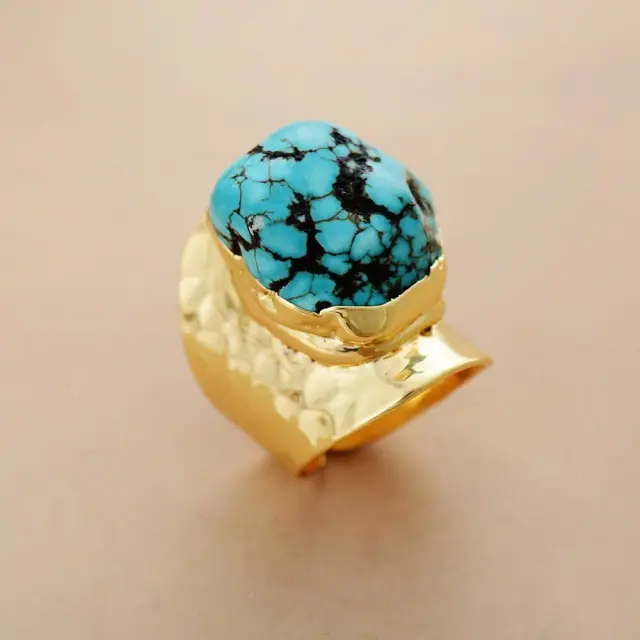 TurquoiseA blue to blue-green stone, recognisable by its shifts in tone and natural matrix.Learn more
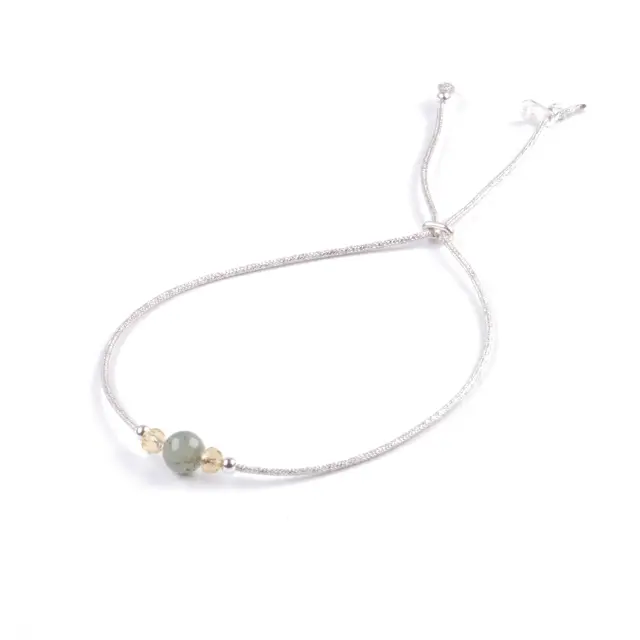 JadeA compact-looking, smooth material worked in greens of different intensity.Learn more
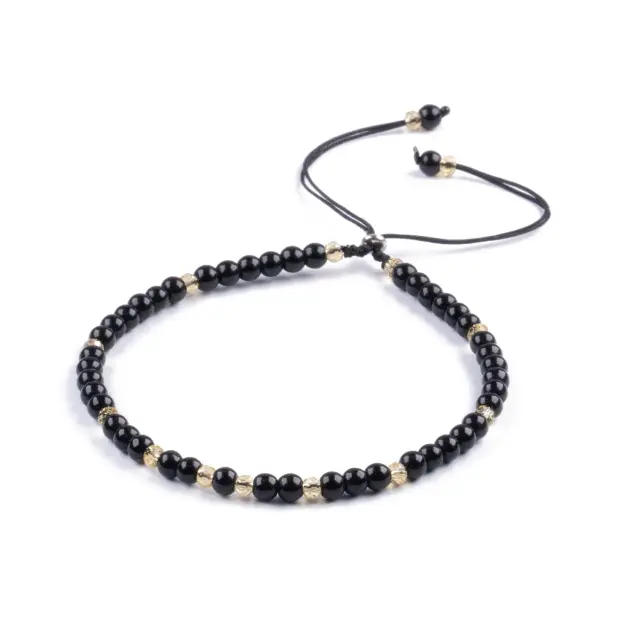 OnyxA dark, highly polished stone chosen for its strong contrast and restraint.Learn more
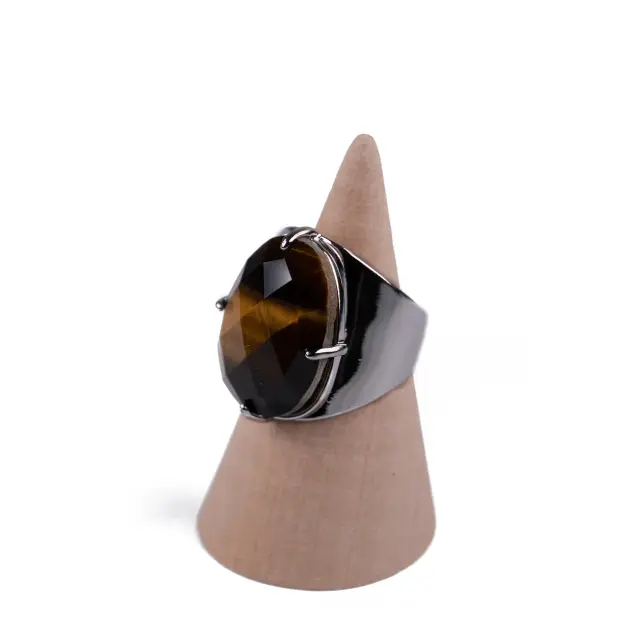 Tiger's eyeQuartz with golden-brown bands and a moving sheen that changes with the light.Learn more
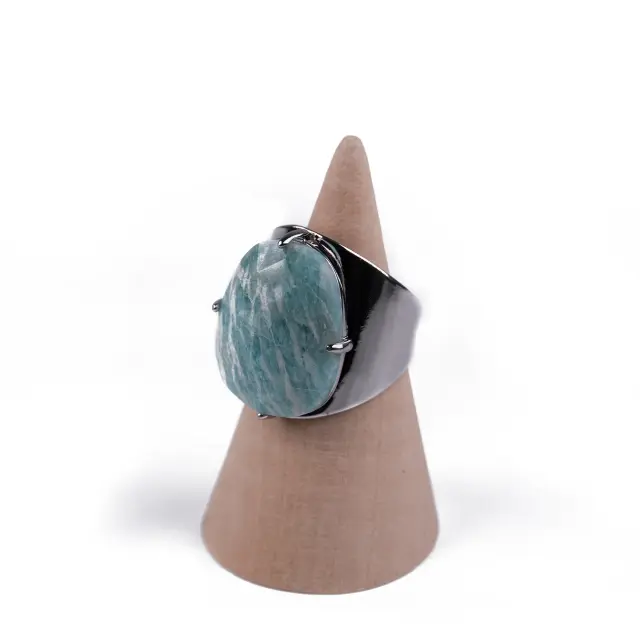 AmazoniteBlue-green feldspar with pale veining and variations that make every bead distinct.Learn more
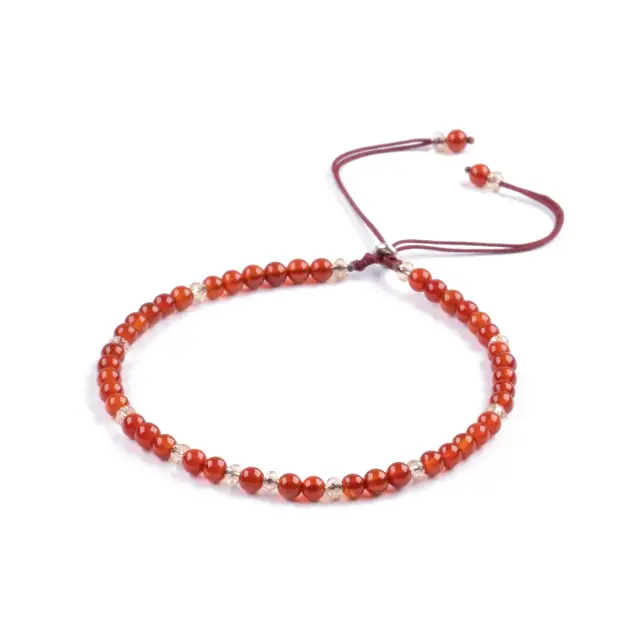 AgateA richly varied chalcedony, often marked by visible bands or layers.Learn more
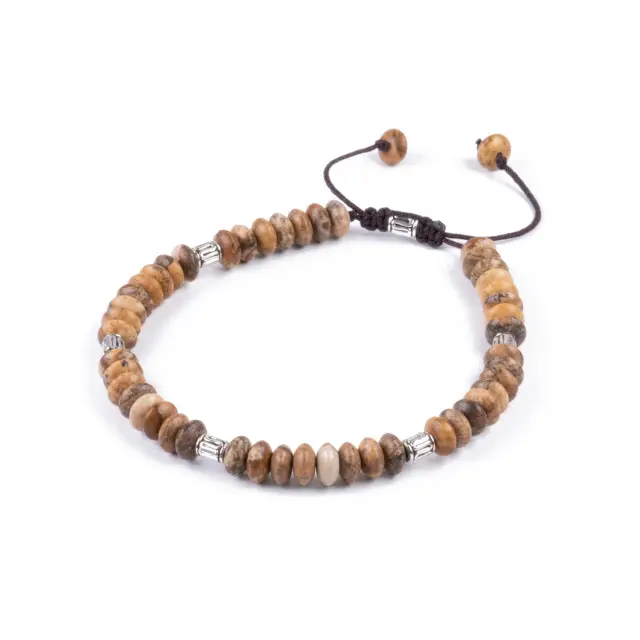 JasperAn opaque member of the quartz family with varied patterns, marks and earthy tones.Learn more
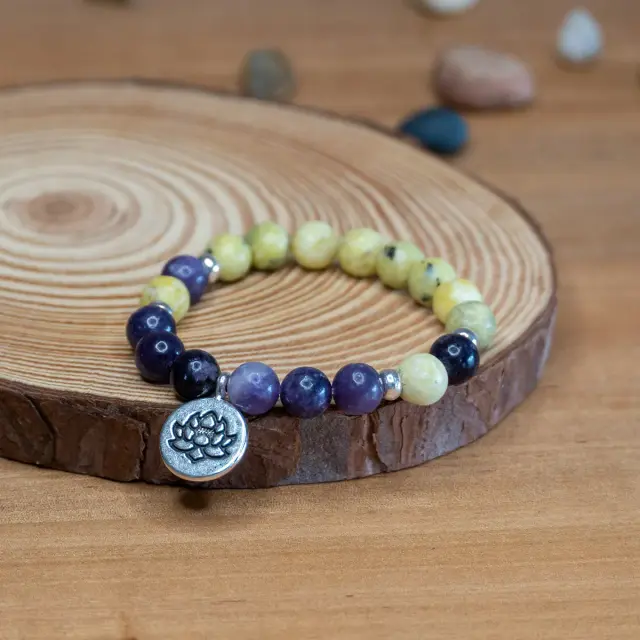 HowliteA pale, porous mineral, usually white with organic-looking grey veining.Learn more
How we verify
We begin with the supreme decree that recognises the stone.
A stone only joins the line with mine or batch documents that support its origin.
We assess the material's colour, veining, quality and stability.
We choose materials and clasps made for everyday wear.