


The Triballe Journal
How to layer necklaces without it looking like too much
Practical layering rules, lengths, textures and one anchor piece, for combining several necklaces without them competing with each other.
01
Necklace layering, combining several pieces at different lengths instead of wearing just one, is one of the simplest ways to give a look more presence without buying anything new. The problem is that done without a criteria, it looks messy instead of intentional. These are the practical rules that separate layering that works from layering that competes with itself.
02
Vary the length, not the count
The most important rule is also the simplest: every necklace needs its own vertical space. If you combine pieces of the same length, they stack on top of each other and look like a single confused mass instead of distinct layers.
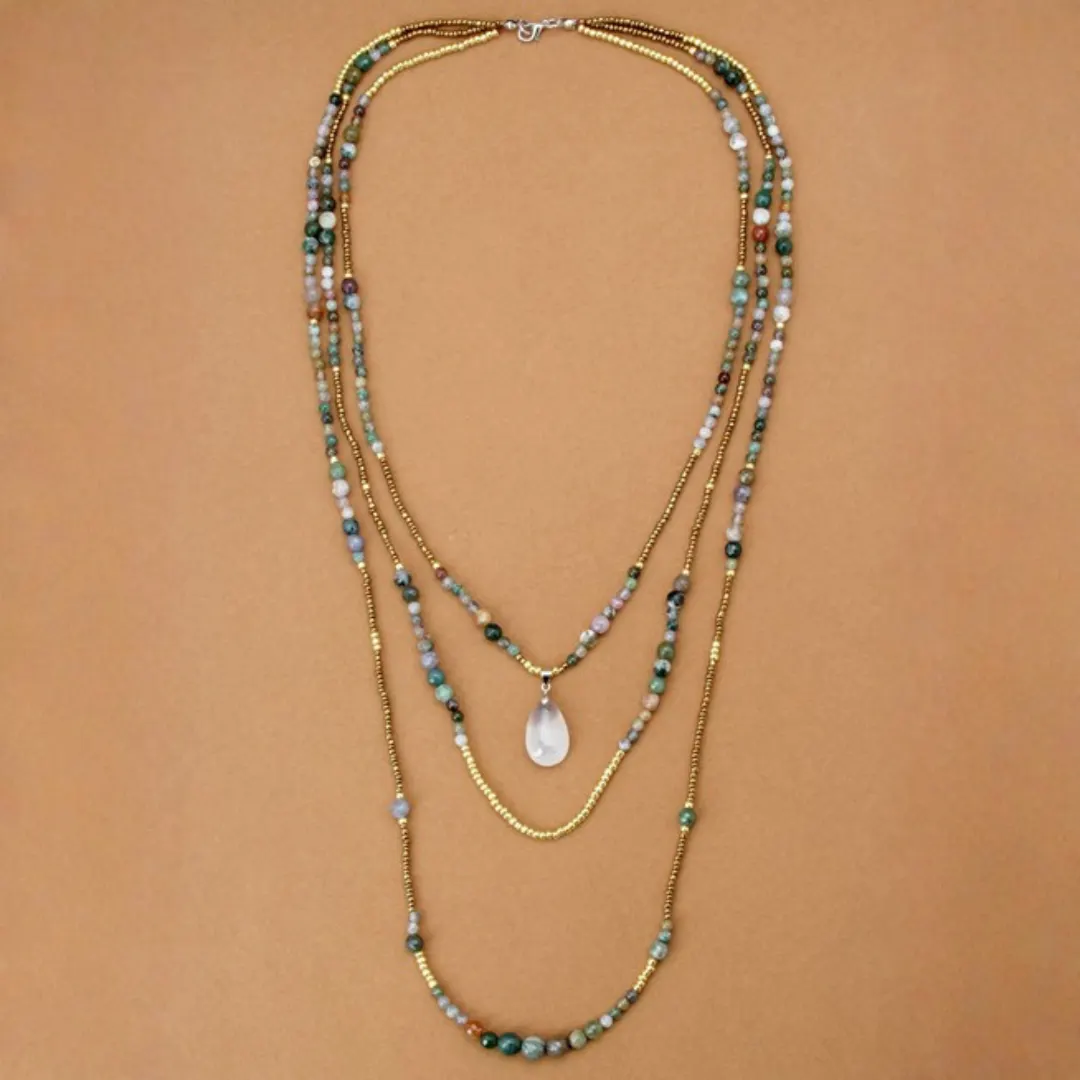
A starting point that works almost every time: one short necklace (choker-style, at collarbone height), one medium (falling over the sternum), and one long (below the chest). With those three reference points you already have a composition with clear visual hierarchy, without needing to calculate exact centimeters.
03
Choose one piece to anchor the rest
Of the pieces you combine, one should clearly be the protagonist: the one with the largest pendant, the most eye-catching stone, or the longest length. The rest play a supporting role: they add texture and color without fighting for attention.
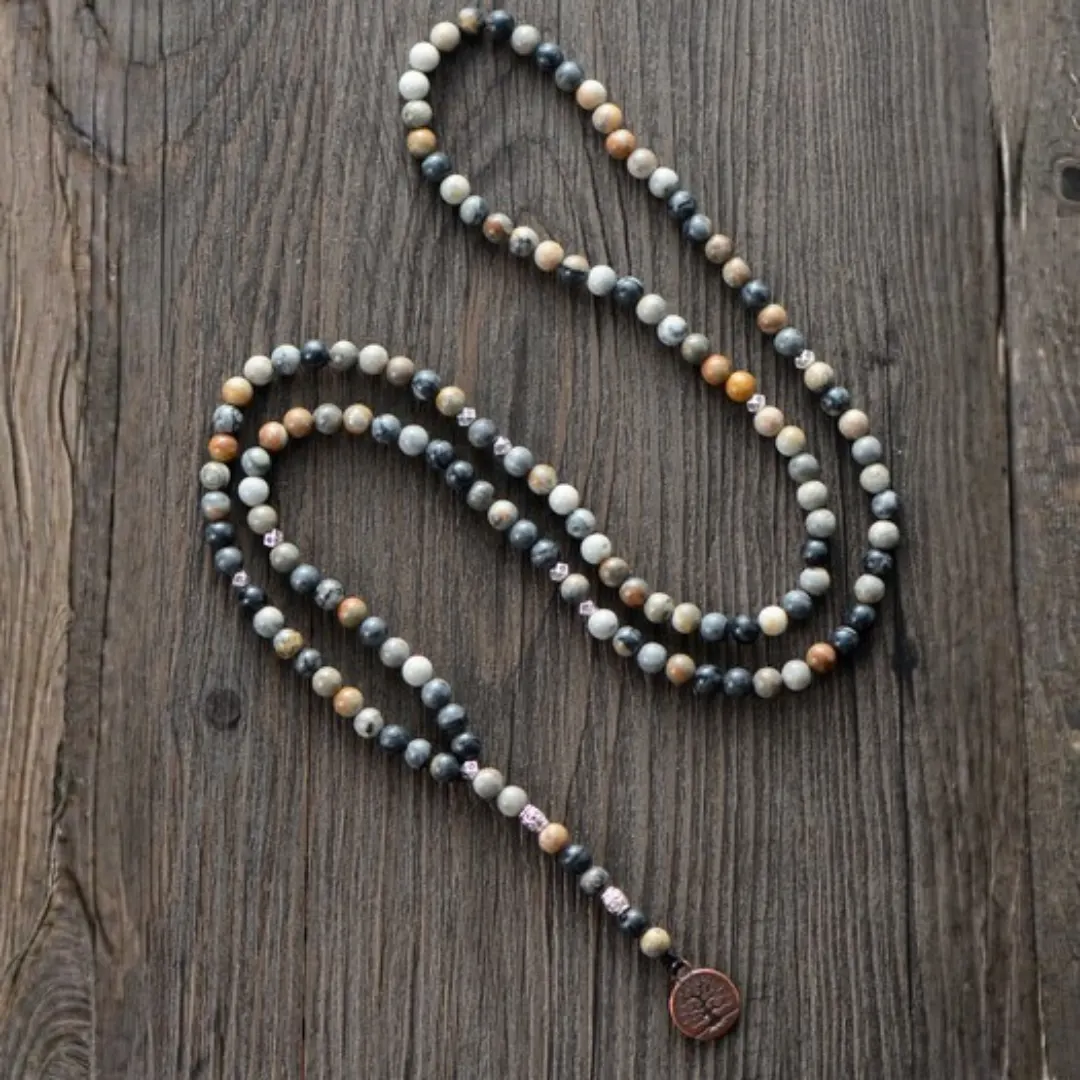
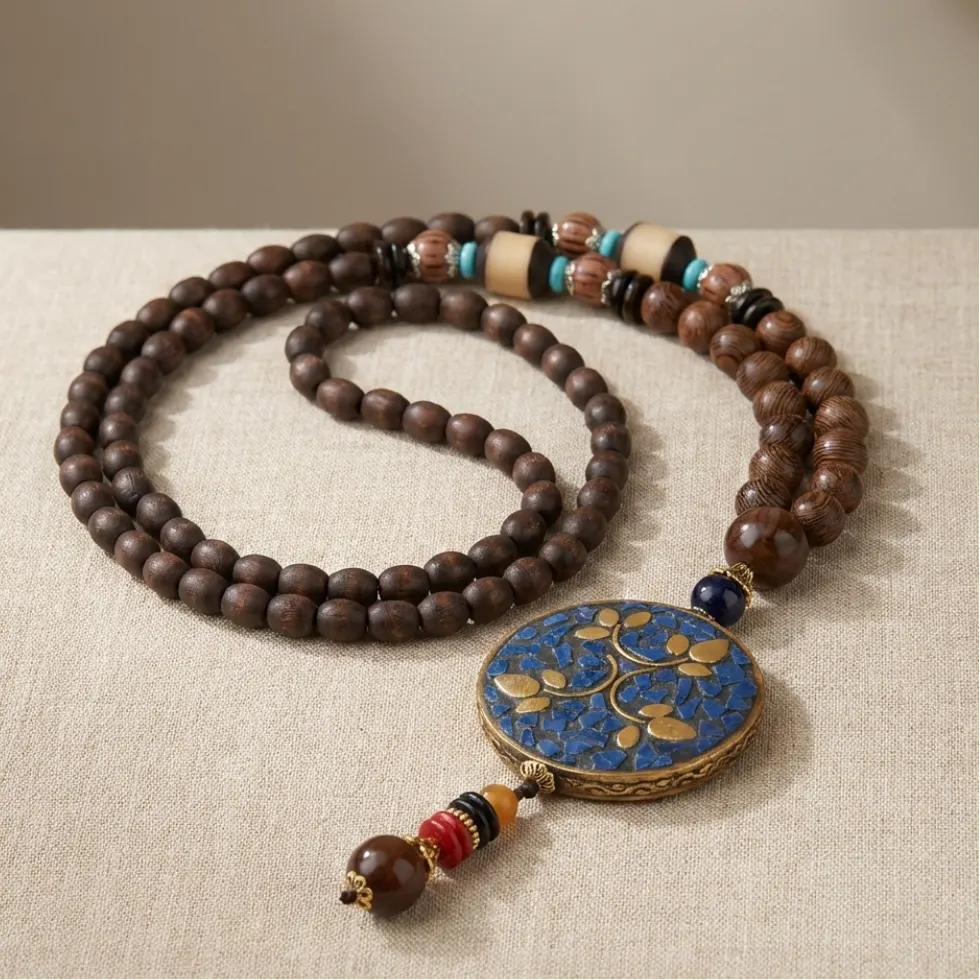
A necklace with a large pendant, like one with a tree of life or an ethnic cross, works well as the anchor. Around that piece, adding thin chains or small-bead necklaces doesn't compete. It complements.
04
Repeat a color or material so the pieces feel connected
Layering looks intentional when there's something visually connecting the pieces: it could be a stone tone that repeats, the same type of metal, or wooden beads present in more than one necklace. Without that connecting thread, several pieces together read as loose accessories, not a put-together look.
They don't need to match perfectly: two or three stones within the same color range (say, blue tones from turquoise and amazonite, or earthy tones from jasper and wood) already create that sense of a set.
05
When to stop
Three pieces is a solid starting point and works with almost any neckline. Four or more can look great in a look specifically built for it, but it requires more care with lengths and materials so it doesn't feel piled on.
If you're not sure, a simple trick: put on everything you were going to combine and take off the piece you'd miss the least. Layering almost always improves by subtracting a piece, not adding another.
A read worth saving.